.webp "PAKOWANIE NA PREZENT")



dodaj do schowka
szt.Do koszyka
Bobby Fischer's Chess Queen by Shernaz Kennedy (twarda okładka)
120,00 zł

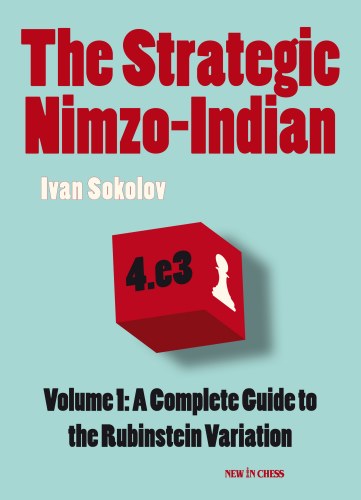
The Nimzo-Indian Defence continues to be one of the most important chess openings, both at club level and with top players. In recent years it has undergone a number of significant changes and it’s high time for a thorough look at the current state of affairs.
Top grandmaster Ivan Sokolov is the perfect authority to do so.
The Strategic Nimzo-Indian: A Complete Guide to the Rubinstein Variation is the first of a two-part series. In this ground-breaking and clearly structured first volume, Sokolov investigates all lines after the move 4.e3. Volume 2 will be about 4.a3, the Sämisch Variation.
Inspired by great masters like Mikhail Botvinnik, Ivan Sokolov has played the Rubinstein Variation all his life, and he has even beaten World Champion Garry Kasparov with it.
Although play can become very sharp, the Nimzo-Indian requires a profound positional understanding. Ivan Sokolov does not simply give variations, but provides clear explanations of the structures and plans in the various branches, and presents new ideas and resources for both Black and White.
Each chapter ends with a summary containing key strategic and tactical advice.
Ivan Sokolov is a top grandmaster who was born in Bosnia in 1968. He was Yugoslav champion in 1988 and Dutch champion in 1995 and 1998. He rose to the number 12 spot in the FIDE world rankings. In his rich career Sokolov has beaten world chess champions like Garry Kasparov, Vladimir Kramnik and Viswanathan Anand.
Carsten Hansen, ChessCafe:
"This book is simply far superior to anything else I have seen written on this opening – my own book included (..) The narrative, the explanatory prose, the analysis, the countless improvements, new ideas and so on, makes this book phenomenally splendid. If you want to understand how to play this opening, then this book is a perfect place to start."
GM Glenn Flear:
"The author is constantly pointing out the positional consequences of the various thematic ideas throughout the lines (..) There are times when his research will almost certainly change the future course of theory (..) Whatever your connection to the Nimzo, make sure that you get hold of a copy. An absolute must."
John Donaldson, Chess Today:
"An outstanding book (..) Sokolov backs up [his] verbal assessments with concrete variations, but the prose is much more valuable for the layman rated below 2400, who will remember the helpful advice long after the analysis has been forgotten."
Joe Petrolito, Australasian Chess Magazine:
"There is a lot of explanatory material to complement the analysis and orientate the reader (..) [Sokolov] is not afraid to challenge previous analysis, even describes some old analysis by Botvinnik as 'wishful thinking'! (..) A dense but readable book on a mainstream opening that can only enhance Sokolov's growing reputation as an author."
Nagesh Havanur, Chess.com:
"I am fascinated. To begin with, this is a repertoire book for d4 players who meet the Nimzo-Indian. But other players reaching d4 d5 positions would also find this useful. There is a serious effort to find an edge for White in every line. The author of course knows that it is not an easy task as the Nimzo-indian is a sound system. Hence, he resists the temptation of finding convenient wins for White."
Gary Lane, Chess Moves Magazine:
"Very readable, with clear, precise comments (..) Sokolov reveals his secrets in the Rubinstein Variation so everyone can be a winner."
Max Euwe Center, Amsterdam:
"A monumental work with lots of explanations, while paying attention to historical games as well as the current state of affairs."
Adam
Hunt, British Chess Magazine:
"A really fine book and a great resource for either White or Black."
Marshtower Chess Reviews:
"This is a serious book for serious players. I think even Grandmasters will find much of interest here and this is almost certainly the best coverage of the Rubinstein Variation to be found anywhere."
Johan Hut, Gooi- en Eemlander:
"Sokolov clearly explains the strategies and various pawn structures. Understanding those matters is very useful if your opponent deviates from the lines you know, and that's the way all opening books should be."
Martin Rieger, Europa Rochade:
"Valuable input from an experienced top-GM who teaches a much deeper insight in the game than just moves and their direct effects."
Richard Vedder, schakers.info:
"There are objective evaluations at the end of every chapter. Sokolov indicates clearly which systems are good for White and against which plan it is somewhat easier for Black to survive. "
Arne Moll, ChessVibes, on 'The Ruy Lopez Revisited':
"This is simply a great opening book, probably one of the best ever on the Spanish Opening."
IM John Watson, The Week In Chess, on 'Winning Chess Middlegames':
"Terrific instructional content and great games."
Liczba stron: 416
Oprawa: miękka
Rok wydania: 2012
Nikt jeszcze nie napisał recenzji do tego produktu. Bądź pierwszy i napisz recenzję.
Tylko zarejestrowani klienci mogą pisać recenzje do produktów. Jeżeli posiadasz konto w naszym sklepie zaloguj się na nie, jeżeli nie załóż bezpłatne konto i napisz recenzję.
Czas wysyłki:Natychmiast
Koszt wysyłki:od 10,00 zł
Numer katalogowy:9789056913786
Kod EAN:9789056913786
Waga:0,80 kg
Producent:Wydawnictwo New in Chess
2 osoby kupiły 2 produkty




Szachy od wieków fascynują ludzi na całym świecie. Choć wielu osobom wydaje się, że to gra tylko dla mistrzów i geniuszy, prawda jest zupełnie inna. Każdy może nauczyć się grać w szachy, a pierwsze kroki są znacznie prostsze, niż się wydaje. ♟️
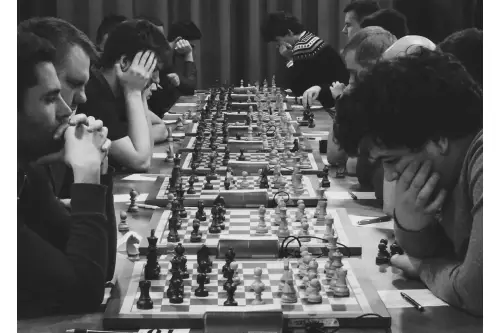
Jak przygotować się do turnieju szachowego?♟️ Kulisy gry, której nie widać na szachownicy ✨
Udział w turniejach szachowych to nie tylko sprawdzian umiejętności, ale i prawdziwa przygoda – emocjonalna, intelektualna i organizacyjna. Jeśli planujesz zadebiutować lub wracasz na szachowe areny, warto wiedzieć, jak się przygotować i co naprawdę dzieje się za kulisami takich wydarzeń.